Ferry Travel Gets Pricier: Ripple Effects of Rising Fuel Costs on Ticket Prices
Ferry Travel Gets Pricier / Ripple Effects of Rising Fuel Costs on Ticket Prices
Ferry Travel Gets Pricier / Ripple Effects of Rising Fuel Costs on Ticket Prices
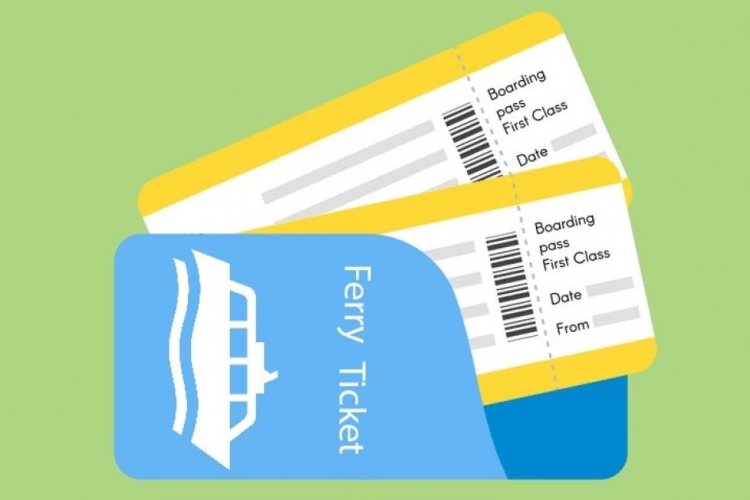
The Greek ferry sector is facing new pressures due to the energy crisis, as rising marine fuel prices are causing significant turbulence in companies’ operating costs. Market sources estimate that if prices remain at such high levels, increases in ferry ticket prices will be difficult to avoid in the coming period.
The greatest burden comes from the sharp rise in fuel prices, which account for roughly half of the total operating cost of a ferry vessel. Within just a few months, prices have increased dramatically, placing considerable strain on companies’ budgets. As industry executives told newmoney, ferry companies are being burdened with an additional €14 million per month, assuming that the price of oil remains around $92–93 per barrel.
The government and the Ministry of Maritime Affairs and Insular Policy are closely monitoring developments in international fuel markets, as strong volatility makes it difficult to estimate how long the crisis will last. They are also in discussions with ferry companies in order to find solutions so that the burden of increases is not passed on to ferry tickets. Various scenarios to contain costs are being considered. Among them is the extension of measures that have been applied in the past, such as reducing port fees for ferry vessels in order to limit pressure on ticket prices. At the same time, ways are being discussed to utilize resources from European and national funds linked to the energy transition and emissions, with the aim of supporting the sector during a period of intense disruption.
Indicative of the situation is the price of Marine Gas Oil (MGO) in Piraeus, widely used in ferry shipping, which has recorded a sharp increase compared to the levels seen at the end of 2025. This rise is directly linked to turbulence in international energy markets and geopolitical developments in the Middle East.
According to a market executive, on 31 December 2025 MGO fuel cost €528 per metric ton. On 27 February, one day before the outbreak of the war, it had risen to €629, and by 9 March it had reached €959, representing an increase of 50%.
“Since fuel accounts for about 50% of the total cost of a ferry company, for the equation to balance, ticket prices would have to increase by around 25% in the form of a fuel surcharge. We are waiting for the outcome of the government’s discussions with ferry operators,” a market executive told newmoney, adding: “Naturally, when fuel prices fall again with the end of the war, the surcharge will disappear as well.”
The rise in fuel prices comes on top of already elevated operating costs for ferry companies. In recent years, the sector has been burdened with new environmental obligations and European Union regulations that increase the cost of compliance and vessel operations.
In this environment, many companies find it difficult to absorb the new increases without passing part of the cost on to ticket prices. Market analysts note that several routes already operate with limited profit margins, making the situation even more pressing. The burden does not concern passengers alone, but also the transport of trucks, which is a key link in the supply chain for the islands. Any increase in freight rates for trucks could affect the cost of transporting goods, with possible consequences for consumer prices.
How the situation develops will largely depend on the duration of the energy crisis and the trajectory of international oil prices. If prices remain at high levels, pressure on the ferry sector is expected to continue.
In any case, this development is a reminder of how closely ferry operations are tied to global energy developments. In a country like Greece, with its extensive island geography, the cost of fuel affects not only transportation but the overall economic life of the islands.


![Guardian Report: War prompts Europeans to switch holidays away from eastern Mediterranean [Greece]](https://static.mykonosticker.com/uploads/images/2026/03/image_705x436_69b6938c1c7ac.jpg)